Social Networking
Social networking has been around for centuries. Synergy and empowering relationships are the essential ingredients of civilization. The internet is an efficient channel of communication for human beings who would like to interact for mutual benefit.
I’ve been a fan of social networking for decades, and I was delighted when social media arrived in the 90’s. I am excited to be at the intersection where “Old School” meets “NuSkule” networking in the 21st century.
The Human Element
Modern channels of communication allow us to leverage global resources more efficiently than ever before. But let us not forget that the “human element” is still the most powerful component of the equation. Wisdom acquired from experience, combined with innovative technology, is an awesome combination!
The Cuban Missile Crisis was an example of human communication triumphing over the incredibly destructive power of technology. If cooler heads had not prevailed, the Third World War could have destroyed civilization. Science and technology have served mankind since the discovery of fire. But human beings are still in control.
Networking Relationships
Social media are, by definition, social, and should not be dominated by software robots. Networking is still about relationships and leveraging trust and personal influence. In the words of Tim Sanders, Chief Solutions Officer at Yahoo, “Love is The Killer App.“
Oct 17
5
Week 1 — Blooming Online
Week 1 – Blooming Online
“As You Sow, So Shall You Reap”
I am excited, anxious, and a bit confused as I begin a new journey of self-discovery with the help of the Master Key MasterMind Alliance. My attention has been directed to the concept that my life results from my actions, which result from my beliefs, which result from a powerful interaction of thoughts and emotions connecting stimuli and responses through conditioning. These stimulus-response connections gradually become habitual reflexes like knee-jerk reactions. Thus I am a creature of habit…
Posted in Master Key Experience by .
Trading Social Assets
What if Social Capital could be evaluated, purchased, and leveraged? “Influencer Marketing” is a hot topic today, but networking (leveraging trust and influence) has been around since tribal chiefs negotiated around campfires. One of the best kept “secrets” among social networks is Empire.Kred .
Connect with “Connectors.”
The social network “Empire Avenue” was recently purchased by the Klout competitor Kred. The “Empire” is not only a social network like Linkedin, but it also includes a “stock market” for social capital. The value of a member’s shares is largely determined by influence on other social media, as well as engagement with others.
The typical member of Empire.Kred is very well connected and influential. in the real world as well as in other social networks. Therefore, by developing relationships with these “Connectors” you can leverage their influence to promote your own brand.
Business or Career Networking is Based on Relationships
Trust and Influence
My definition of networking is: “leveraging trust and influence.” It takes a long time to make an old friend! Trust and influence are cultivated over time and are based on experience with the friend’s past performance. Sometimes difficult challenges help you find out who your real friends are!
If all we did at a live “speed networking” event were to collect business cards, we might be better off with the Yellow Pages directory. It would save us time and money, and it would have an organized index! Have you ever looked at your stack of business cards and wondered who were those people? Do you realize that they’re wondering the same thing about your business card?
Networking Begins with Preparation and Ends with Follow Up
Credit for the image above goes to Teresa Humbert, who wrote an article on Heather Huhman’s blog, “ComeRecomended.” Teresa makes five sugestions, beginning with preparation:
1.Google: It is important to Google or LinkedInthe person that you’re meeting with because it will help you network with them. It gives you insight into the industry they’re in, the company they work for and how they can help you.
and ending with follow-up:
5.Follow Up: Make sure that you send them an email saying how much you appreciated the fact that they met with you. If they actually get you another contact, tell them how that meeting went as well. If the people that you are networking with believe that you are appreciative, then they are more likely to help you out more in the future.
Social Capital
In a previous post about “Social Capital Futures,” I wrote:
When you need a friend, ”social capital” beats all other investments. There is nothing so valuable as a true friend who “has your back” and is there for you in time of need.
The Center for Human Systems posted an article about building trust and influence in which they wrote:
Building Trust
The strongest relationships, which allow the most influence simply for the asking, are built over time and have been tempered through hard times. These relationships have become worthy of trust. Trust is a critical aspect of relationships where ready influence is needed.
Connecting with Influencers
Nyerr Parham, Marketing Manager at Appinions, posted a helpful article on her web site, in which she states:
The foundation of influence marketing is building relationships with individuals who are in a position to help your brand increase awareness, build reputation, connect with an audience, and make sales. The basis for all of these goals is the development of a relationship with an influencer.
So once you’ve decided to reach out to influencers, should you do so as a brand or as an individual? Just who owns (or should own) these influencer relationships?
Our answer: Influencers want to develop relationships with people, so it makes sense to reach out as yourself – a living and breathing person – rather than a brand.
Social media are, by definition, social, and should not be overly automated. A “conversation” between virtual robots would seem oxymoronic! Networking is still about relationships among people. I call it “leveraging trust and personal influence.”
Do you prepare for networking? Do you follow up? Please share your COMMENTS or suggestions for achieving better ROI from networking or what my friend Ted Rubin calls “ROR” (Return on Relationship)…

For better or for worse, I believe that social media have impacted our world as much as the telephone or the electric light. In particular the ubiquitous phenomenon of “sharing” our lives online must be affecting human relationships in many ways.
What are Your Thoughts? Please Comment…
(Notice that I use Comment Luv to link back to your blog.) Darren Rowse suggested that I write this as part of a challenge on the ProBlogger Community: http://www.problogger.net/archives/2013/03/30/group-writing-project-write-a-discussion-post/
Apr 13
12
Einstein on Human Relativity
Declaration of Interdependence
Albert Einstein is known as one of the smartest men in the world and the author of the theory of relativity. Did you know that he applied the concept of relativity to human relationships as well?
In his essay, The World as I See It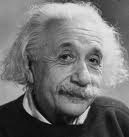 , Einstein wrote:
…without deeper reflection one knows from daily life that one exists for other people — first of all for those upon whose smiles and well-being our own happiness is wholly dependent, and then for the many, unknown to us, to whose destinies we are bound by the ties of sympathy. A hundred times every day I remind myself that my inner and outer life are based on the labors of other men, living and dead, and that I must exert myself in order to give in the same measure as I have received and am still receiving…
Relativity Goes Both Ways
Anthony Robbins says,
Some of the biggest challenges in relationships come from the fact that most people enter a relationship in order to get something. They’re trying to find someone who’s going to make them feel good. In reality, the only way a relationship will last is if you see your relationship as a place that you go to give, and not a place that you go to take.
Mobile Society Strains Relationships
With freedom comes geographical mobility. Unfortunately, we often move and often leave friends and business contacts behind — out of sight, out of mind. All too often we waste the precious deposits previously made in “emotional bank accounts.” What a sad loss of valuable social capital! It takes a long time to make an old friend! It is so special to be able to say, “we go waaaay back!”
In a previous post I offered a partial solution: “Social Media Deposits in Emotional Bank Accounts.” I wrote:
It is very sad when “the illusive butterfly of love” flies away, or when we lose touch with old friends or family. This subject calls to mind the lyrics from the Simon and Garfunkel song, “Someone left the cake out in the rain! I don’t think that I can make it; ’cause it took so long to bake it, and I’ll never have the recipe again!”
… it is no accident that the strength of a friendship or family relationship may increase or decrease over time. The relationship must be nurtured or else it will whither.
Mobile Phones to the Rescue!
I hope that new technology and social networking services will help us keep in touch with old friends. However, as with any tools, it is up to the human operator to use them effectively. Another great new channel of communication is Video Conferencing. It helps to include non-verbal communication signals.
Free Video Conferencing Online with
Google Hangout
Google has introduced an amazing new tool for FREE VIDEO CONFERENCING. Google Hangout allows you to use your webcam to conference with up to ten presenters in up to 10 different locations simultaneously. You can even broadcast the conference LIVE or RECORDED to an unlimited audience.
Apr 13
11
Better Than Money?
Does Money Buy Happiness? 
What is Better Than Money?
An article by Geoffrey James in Inc. Magazine outlines “10 Things Better Than Money,” in which he writes:
Assuming you want to create both wealth and happiness for yourself and those around you, you have two approaches: wait until you’re wealthy to be happy, or become more happy now and thereby create more wealth.
I maintain that, in today’s economy, it’s easier to start with the happiness, because unlike wealth (which takes time to accumulate), you can increase the amount of happiness in your life within minutes, simply by taking more notice of things that make you happy.
What Women (and Men) Really Want
Let’s be honest here. Money can certainly help us satisfy our basic needs, like food, shelter, safety, etc. One could even buy sex. Poverty can make life more difficult. Money can even enhance our self-esteem and help us satisfy our need for belonging. However, the love of money for its own sake can lead to unhappiness. I am not against money. My main point in this post is that there are some things that are even “better than money”.
Attention!
People need attention to satisfy a wide range of emotional needs, including love, belonging, and empowerment. Children will do whatever it takes to get attention — even misbehaving. Teenagers use “shocking” styles of clothing and grooming to be noticed. Adults try to “keep up with the Joneses.” Flashy red or yellow sports cars get attention.
If you had unlimited wealth, wouldn’t you like to share some? The good news is that you DO have a virtual fortune in gems that are better than money! Pay attention! This is one secret of successful leadership…pay attention! Rather invest attention… Being interested makes you interesting!
Recognition
Psychologists believe that attention and recognition are primary needs, like food and water. Understanding this secret can be the key to your success as a leader. Knowing this secret helped Mary Kay build a billion dollar empire. She said, “There are two things that people want even more than sex and money: recognition and praise.”
Sincere praise costs the giver very little, but it is precious to the receiver. What a fantastic bargain!
Faith, Hope and Love 

The Dalai Lama wrote a post about our need for love on the “HealYourLife.com” blog. Here are some excerpts from that article:
ULTIMATELY, the reason why love and compassion bring us the greatest happiness is simply that our nature cherishes them above all else. The need for love lies at the very foundation of human existence. It results from the profound interdependence we all share with one another.
No material object—however beautiful or valuable—can make us feel loved, because our deeper identity and true character lie in the subjective nature of the mind.
Job Satisfaction and Personal Fulfillment
According to Psychologist Abraham Maslow, when we are not starved for food or safety, we tend to seek love and belonging. If we have love and belonging, we seek respect and creativity, etc. Most people in the modern world are motivated by more than hunger or security.
Steve Jobs, Founder of Apple, said, “The only way to do great work is to love what you do. If you haven’t found it yet, keep looking. Don’t settle. As with all matters of the heart, you’ll know when you find it.”
Why can’t we all be satisfied?
An article in the PsyBlog outlines “10 Psychological Keys to Job Satisfaction,” with the following conclusion:
When you look at this list of what makes for a satisfying job, you might wonder why everyone can’t have one. With a little thought, most of the predictors of satisfaction can be provided.
The answer is probably quite simple. Organisations pay lip-service to keeping their employees satisfied, but many don’t really believe it makes a difference. What this research shows is that it can make a huge difference.
In conclusion, I hope that while we are busy “making” money, we will keep the need for money in perspective relative to other needs. Let’s be happy, healthy, and satisfied! Now, please make me happy by sharing some “Comment Luv.” I will love you back… 😉
Will Influence Marketing Really Create ROI ?
Businesses can no longer ignore social media. Social networking is the “800 pound gorilla” in the room, but there is much debate about whether investment in social media actually brings a profitable return.
In their upcoming book, Influence Marketing: How to Create, Manage and Measure Influence Marketing in Social Media Marketing, Danny Brown and Sam Fiorella propose “a model that demonstrates how the growing practice of influence marketing can measurably impact purchase decisions instead of simply driving brand awareness.” They point out that “marketing efforts developed with a focus on generating profits often fail to consider the customer experience (italics mine) and ends up negatively impacting the generation of revenue and/or profit.”
They contend that their strategy will “help you manage the influence paths that lead consumers to buy.” Here are some of their main points:
- Put the customer—not the influencer—at the center, and plan influence marketing accordingly
- Recognize where each prospect stands in the purchase life cycle right now
- Clarify how your consumers move from brand preference to purchase
- Identify key micro-influencers who impact decisions at every stage
- Gain indispensable insights into the context of online relationships
- Recognize situational factors that derail social media brand recommendations
- Understand social influence scoring models and overcome their limitations
- Re-engineer and predict influence paths to generate measurable action
- Master the “4 Ms” of influence marketing: make, manage, monitor, measure
- Transform influence marketing from a “nice-to-have” exercise into a powerful strategy
Connecting with Influencers
Nyerr Parham, Marketing Manager at Appinions, posted a helpful article on her web site, in which she states:
The foundation of influence marketing is building relationships with individuals who are in a position to help your brand increase awareness, build reputation, connect with an audience, and make sales. The basis for all of these goals is the development of a relationship with an influencer.
So once you’ve decided to reach out to influencers, should you do so as a brand or as an individual? Just who owns (or should own) these influencer relationships?
Our answer: Influencers want to develop relationships with people, so it makes sense to reach out as yourself – a living and breathing person – rather than a brand.
Influence online
On his TweakYourBiz.com web site, Greg Fry wrote:
Companies have started to realise two things:
- People who traditionally had little influence offline have become very very influential online.
- Unless they engage effectively with their target audience online their numbers will have little or no ROI.
For this reason we are seeing the more social media savvy companies starting to focus on building more meaningful relationships with their communities online and spending more time identifying and engaging with the most influential online consumers in their industry.
Measuring Influence
Mark W. Shaefer, author of the book Return On Influence, has studied the problem of measuring social influence intensively. Attempting to keep current with the latest developments in the field, he writes in his blog named “grow”:
1) This is a historically important time where personal power has been enabled through our ability to publish on the web.
2) The nature of power and influence in the online world is vastly different than what we are accustomed to in the offline world. It’s important for businesses and individuals to understand this — your paradigm has to shift.
An Idea Whose Time Has Come
Writing about the French Revolution against dictatorship by the monarchy, Victor Hugo famously said, “All the forces in the world are not so powerful as an idea whose time has come.”
“Social Influence Strategy”
I believe that social influence has always been extremely important, and the explosion of social media is a game changer. I intend to continue to research this issue and write about it on my new blog, “Social Influence Strategy.com.” If you agree that this is an interesting subject, please “stay tuned.” And please share your comments below.
Video Conferencing is the Solution for Communication — Both Verbal and Nonverbal

Communication technology has come a long way since the Pony Express and the Telegraph (Western Union : no offense).
Telephones and Mobile Phones have added the vocal component and now “Video Conferencing” includes the visual component, which is perhaps the most important part when it comes to communicating attitudes and feelings
Larry Kless wrote an excellent post on his blog, including:
Verbal and Nonverbal Communication Tips
- If possible have more than one presenter, change of pace will keep attention.
- Keep your comments moving in a logical flow.
- Use verbal illustrations to relate your points to the participants.
- Summarize your main points.
- Clearly state what you expect the participants to do with the information.
- Speak slowly and look at the camera.
- The best option is to try to stay seated or stand in one place. Try not to pace.
- Look at the camera, not your notes.
- Keep your arms unfolded
- Keep hand gestures close to your body. Try not to gesture wildly.
Elements of Communication
Psychology Professor Albert Mehrabian (UCLA) studied how humans communicate their feelings. He concluded that communication is 7% Verbal, 38% Vocal, and 55% Visual. In a previous post I elaborated on “Non-Verbal Communication in Social Media.” Geoff Snyder’s leadership blog describes the components well:
Almost every facet of our personality is revealed through our appearance, our body language, our gestures, our facials expressions, our overall demeanor, and our posture and movements.It can include your attire, tone of voice, clearing your throat, rubbing your eyes, crossing your arms, tapping your toes, scratching your nose. Eye contact, or lack thereof, gestures, crossed legs, open arms, and the scent we transmit are all forms of non-verbal communication. Through your choice of clothing, hairstyle, glasses, accessories, and makeup if applicable, your appearance also communicates a strong message.

Especially emotion and conviction are conveyed better through visual cues than through mere text. This is why corporations and governments spend hundreds of millions of dollars (and thousands of person-hours) flying key personnel around the world for face-to-face meetings. It is why the U.S. President and Secretary of State travel in person to visit other countries.
These nonverbal factors present a big challenge for those of us who want to use social media to communicate. Not to mention the phenomenon of computers “talking” to each other with automated social media! The $64,000. question is, “How can we send and receive nonverbal messages in a verbal environment?”
Video Conferencing is the Solution
I believe Video Conferencing is the solution. When I want to totally communicate or to build trust with an internet contact, I use free video conferencing from Google Plus. Google Hangout is like Skype on steroids. Up to 10 people video-conferencing on their webcams from up to 10 locations and all seeing each other.
Google Hangout “On Air” allows LIVE BROADCAST to unlimited audience and/or recording and replay. Features include screen sharing and white boarding, etc. http://LearnGoogleHangouts.com/ Think of the time, money and “jet-lag” that can be saved, compared to the old-fashioned kind of “air travel.”
Is it What You Know or Who You know that Counts?
You have heard people say, “It’s who you know, not what you know, that counts.” Of course, what you know does count, too. But I think that what counts the most is how the people you know feel about you! Knowing them is not enough. Do they LIKE you? Do they TRUST you? Do they RESPECT you?
The following is an excerpt from a guest article written by Gregory Schnese, the Web Producer for beYOU.tv, in Jay White’s cool blog, called “Dumb Little Man.”
According to John G. Ango, an executive business coach:
“The formula for success = your human capital (what you know) times your social capital (who you know) times your reputation (who trusts you).”
When you build relationships you are increasing your social capital and reputation. You may even build your human capital too, because you can learn a lot through your relationships.
In a previous post about “Social Capital Futures,” I wrote:
When you need a friend, “social capital” beats all other investments. There is nothing so valuable as a true friend who “has your back” and is there for you in time of need. On the flip side, I love the meaning of the song, “You put me high upon a pedestal — so high that I could see eternity — you needed me….” It feels good to be important and valuable to others.
Family and real friends are the best kind of “securities.” Social media relationships can increase your social capital. I love making friends for a living as well as for fun, but there is also security in relationships.
The Center for Human Systems posted an article about building trust and influence in which they wrote:
Building Trust
The strongest relationships, which allow the most influence simply for the asking, are built over time and have been tempered through hard times. These relationships have become worthy of trust. Trust is a critical aspect of relationships where ready influence is needed. To trust you to the point of readily using my energy on your behalf, I must trust you in a larger way. This level of trust is a sense of confidence that someone will consistently behave in ways that will support our well-being. Good intentions by themselves are insufficient.
There are five primary aspects of trust. They are…
- Honesty
- Openness
- Keeping Agreements
- Understanding
- Loyalty
In a previous post about “Building Trust with Social Media,” I wrote:
Trust is a key component in business (and personal) decisions. Greg Ferenstein wrote an interesting post on the Mashable blog about trust in social media, in which he quoted Professor Judith Olson, who has studied the essentials of building trust in digital communication. One of her most important findings is that “responsiveness is key” in building trust.
So, for instance, it is better to respond to a long Facebook message “acknowledging” that you received the message, rather than to wait until there’s time to send a more thorough first message.
Belongingness Hypothesis
Image credit to “The Red Boa” blog. 
The belongingness hypothesis was proposed by Psychologists Baumeister and Leary in 1995, who suggested that human beings have an almost universal need to form and maintain at least some degree of interpersonal relationships with other humans. According to these theorists, belongingness is an innate quality with an evolutionary basis, and would have clear survival and reproductive benefits. They suggest that this drive motivates humans “to maintain at least a minimum quantity of lasting, positive and significant relationships.” The popular term “significant other” comes to mind.
Wikipedia describes “Belongingness” as:
“the human emotional need to be an accepted member of a group. Whether it is family, friends, co-workers, or a sports team, humans have an inherent desire to belong and be an important part of something greater than themselves. The motive to belong is the need for ‘strong, stable relationships with other people.‘ This implies a relationship that is greater than simple acquaintance or familiarity. The need to belong is the need to give and receive affection from others.”
The Approval Motive
In 1960 Psychologists Crowne and Marlowe developed a measure of their theoretical “Need for Approval” or “Social Desirability.” Today we often refer to being “politically correct.” “Peer pressure” is a consequence of this motive.
How to Motivate People to Do What You Want
Ben Franklin is quoted as saying that the only way to get people to do what you want them to do is to find out what they want and show them how to get it by doing what you want. I believe it is a pretty good bet that anyone you meet wants to belong and to be approved of. By giving them what they want, you can motivate them to do what you want.
Of course, it always works best if your friendship and approval are sincere. I am not suggesting that you fake approval to manipulate someone. The point is that we very often have the opportunity to give recognition and approval sincerely. However, we often waste the opportunity to win friends and influence people by not expressing the sincere praise we are silently thinking about.
Catch Them Doing Something Right and Reinforce It
Positive reinforcement creates a win-win situation. What gets rewarded gets repeated. Furthermore, the recipient of the reward likes you better for it as well. They will want to please you again. On the contrary, if you focus on what they do wrong and punish them, they will avoid you like the plague.
If you want to win friends and influence people, it is wise to find a way to “make them right.” If you try to argue with someone, you will no doubt find that a person convinced against his will is of the same opinion still. It is human nature to defend one’s ego. We are all highly motivated to “look good” and to be perceived as “right.” Going against this drive is like swimming upstream against the current. If you disagree with someone, it is most effective to find a way to allow them to “save face” by agreeing with you.
Maslow’s Hierarchy of Human Needs
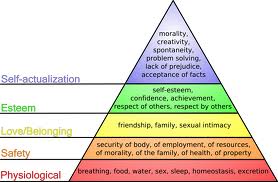
Professor Abraham Maslow noticed that some human needs take precedence over others, but when the more urgent needs are met, a person is motivated by “higher” needs.
Maslow outlined a hierarchy of human needs in the shape of a pyramid. His theory has been widely accepted as a basis for understanding why humans behave the way they do.
According to this theory, an individual seeks to satisfy the more primitive needs first, and only then turns attention to the higher needs.
An article on BusinessBalls.com website states that:
“The Hierarchy of Needs theory remains valid today for understanding human motivation, management training, and personal development. Indeed, Maslow’s ideas surrounding the Hierarchy of Needs concerning the responsibility of employers to provide a workplace environment that encourages and enables employees to fulfill their own unique potential (self-actualization) are today more relevant than ever.”
Job Satisfaction and Personal Fulfillment
When we are not starved for food or safety, we tend to seek love and belonging. If we have love and belonging, we seek respect and creativity, etc. Most people in the modern world are motivated by more than hunger or security.
Steve Jobs, Founder of Apple, said, “The only way to do great work is to love what you do. If you haven’t found it yet, keep looking. Don’t settle. As with all matters of the heart, you’ll know when you find it.”
Why can’t we all be satisfied?
An article in the PsyBlog outlines “10 Psychological Keys to Job Satisfaction,” with the following conclusion:
When you look at this list of what makes for a satisfying job, you might wonder why everyone can’t have one. With a little thought, most of the predictors of satisfaction can be provided.
The answer is probably quite simple. Organisations pay lip-service to keeping their employees satisfied, but many don’t really believe it makes a difference. What this research shows is that it can make a huge difference.
Create Your Own Dream Job
Leo Babauta suggests, on the ZenHabits.net blog, “If you can’t find your dream job, create your own.” He says:
I was once unemployed, and I know the debilitating depression and the feelings of frustration and helplessness that can come with that. I’ve been stuck in a job I hate, and I felt imprisoned, trapped doing work that bored me while following orders of others and helping them achieve their goals.
Luckily I rose above those traps, but I have to admit it wasn’t easy. The solution has been one of the most liberating, empowering, joyous things in my life.
I wanted to share that little secret with those of you who are having a hard time finding a job, or who feel trapped in a job you hate:
Create your own dream job. Don’t wait for someone to hand it to you. Don’t hope that you’ll win the lottery. Don’t give up and consign yourself to a fate of misery and (worse) dullness.
In the 21st Century it may be easier to find a way to earn a living from home, due to the internet. Personally, I have been self-employed for almost 40 years, and I have to admit that that it has not always been easy. It has involved sacrifices and risks. There have been very hard times. It is not for everyone. But I wouldn’t trade the freedom and creative satisfaction for a job.
Posted in Business Relationships Leadership Personal Effectiveness Uncategorized by .
How to Use Parkinson’s Law to Your Advantage
The 30 Day Blogging Challenge has reminded me of Parkinson’s Law, “Work expands to fill the time available for its completion.” I have been extremely busy lately, and yet I really want to blog daily. My “To Do List” runneth over, and I am faced with time management choices. Dean Hunt wrote a very helpful blog post called, “How to NEVER get Anything Done.” Dean deserves credit for the following image:
I have about an hour before I have to leave for a meeting. Therefore I am allotting one hour for this blog post — and that is about how long it will take. When the hour is up, I will click “Publish.” I will take a 3-minute shower before leaving. If I had more time, my shower would last longer 😉
Joel Falconer wrote a helpful article on the Lifehack website, in which he said,
Parkinson’s Law – work expands to fill the time available for its completion – means that if you give yourself a week to complete a two hour task, then (psychologically speaking) the task will increase in complexity and become more daunting so as to fill that week. It may not even fill the extra time with more work, but just stress and tension about having to get it done. By assigning the right amount of time to a task, we gain back more time and the task will reduce in complexity to its natural state.
It works because people give tasks longer than they really need, sometimes because they want some ‘leg room’ or buffer, but usually because they have an inflated idea of how long the task takes to complete. People don’t become fully aware of how quickly some tasks can be completed until they test this principle.
Make a list of your tasks, and divide them up by the amount of time it takes to complete them. Then give yourself half that time to complete each task. You have to … treat them like any other deadline.
It is often said that if you want to get something important done, ask a busy person to do it. Busy people get things done. They are busy because they are ambitious. In many cases they have learned how to apply Parkinson’s Law.
Another very valuable concept is “The Pareto Principle,” aka “The 80/20 Rule.” In a previous post, “7 Time Management Tips,” I explained “The realization that 80% of valuable results come from 20% of our activities is really a very exciting concept. It offers the possibility of quadrupling our results by focusing on the vital few rather than the trivial many.
Posted in Business Relationships Leadership Personal Effectiveness Uncategorized by .
Apr 13
1
Important vs. Urgent
What is Really Important?
“First Things First”
One of the most valuable books I have ever read is Stephen Covey’s First Things First. I try to remember and remind myself frequently of the profound concepts in that book, which is a follow-up to Covey’s famous game changer, Seven Habits of Highly Effective People.
Important vs. Urgent
Stephen Covey recommends that we “keep the main thing the main thing.” He explains that “urgent” things constantly distract us from truly important things that do not seem urgent at the time. Because they do not seem to be urgent or necessary at any given moment, we put of many of the most important things while we waste our precious time doing what seems more “urgent.” We are so busy putting out fires that we leave no time for fire prevention.
Covey’s research at the Covey Leadership Center indicates that the main difference between highly effective people and unsuccessful people is that effective people do important things even when they are not urgent. Everybody does important things when they are urgent. We wait to go to the Dentist until our teeth ache. We put off physical exams until we hurt. We can always exercise tomorrow — until it is too late! We can brush our teeth and floss later, or maybe skip it for today.
Effective People are “Proactive vs. Reactive.”
We can choose to make things happen on purpose, or we can by default let things happen to us. Everyday we have the golden opportunity to take control of our own life.
Ironically, it is natural to procrastinate about important things more so than unimportant things, simply because they are important and therefor scary. We may fear performing inadequately, or to put it more positively, we want to wait until we are prepared to do it very well. This is exactly why I put off writing blog posts! I want my posts to be as valuable as possible.
Opportunity Cost
One of the most memorable things I learned in graduate school was that “Not everything worth doing is worth doing well.” Time and resources are finite (not unlimited), which means that choosing to spend time on one thing keeps us from doing another. See my blog post, “Opportunity Cost.”
Well Begun is Half Done
Gavin Mountford, among others, has said, “It is more important to get it going than to get it right.” Remember the famous quote from Johann Wolfgang von Goethe, Until one is committed, there is hesitancy, the chance to draw back, always ineffectiveness. Concerning all acts of initiative and creation, there is one elementary truth the ignorance of which kills countless ideas and splendid plans: that the moment one definitely commits oneself, then providence moves too...
Whatever you do, or dream you can, begin it. Boldness has genius and power and magic in it.”
Posted in Leadership Personal Effectiveness Uncategorized by .
 Contacts, Connections, Relationships — ROI
Is it possible to have too many contacts? Maybe so!
I find myself spending a LOT of time adding “friends,” “followers,” and “connections,” and I am proud of the number I have. I assume that there is potential for value from contacts. Maybe they are assets?
The problem is that our time and resources are limited, so the real value question is, “Compared to what?”
Don’t ask, “Yes or No?” Ask, WHICH ? All decisions are relative. Every time we choose to do something, we choose, by default, NOT to do other things. Our time, money, energy, attention, and social capital, are limited…
Engage
The time we spend on adding “connections” interferes with the time we could be investing in engagement with a select few human beings with whom we are building real relationships. I suppose that the size of our “list” matters if our strategy is to blast emails or ads (a “numbers game”), but if we want real loyal fans who know, like, and trust us, we need to ENGAGE…
In another post on this blog ( https://relatingonline.com/archives/845 ) I stated,
Relationships online are formed by engaging in conversations and interacting. Commenting on another person’s posts or status updates is just as important as posting your own content. Following up and responding to the comments of others gives them attention and recognition, which are important human needs.
Non-Verbal Communication
In another post on this blog, https://relatingonline.com/archives/166 I wrote:
People buy your “music” more than your words. Body language speaks volumes! Interpersonal perception and “chemistry” are mostly unconscious and based on subtle natural cues, like “eye contact,” tone and “warmth” of voice, a real handshake, …
These nonverbal factors present a big challenge for those of us who want to use social media to communicate. Not to mention the phenomenon of computers “talking” to each other with automated social media! The $64,000. question is, “How can we send and receive nonverbal messages in a verbal environment?”
Of course, what we really want to accomplish is effectiveness, as well as efficiency. Fortunately, social networks have recently added LIVE video streaming apps and “Stories” as well as video conferencing tools. These are the next best thing to being there.

Jan 13
15
“Good Samaritan” to the Rescue!

Modern Day “Good Samaritan”
My faith in human kindness and compassion was renewed when Hank Zimmerman, Manager of Gates Auto Body in Middleton, volunteered to help a stranded motorist and went the extra mile and then some! Based on his altruism and generosity, I believe he would go way beyond the call of duty to make sure that he serves his customers with integrity and competence.
Hank is a “Good Samaritan” who came to our rescue when he was on vacation at a resort in Florida. After my experience with Hank (in Florida where he had no expectation of gaining a customer), I would trust him completely and would enthusiastically recommend him and his body shop to anyone.
Here is a brief summary of how he demonstrated the best of human nature:
My wife was starting to back out of a crowded parking lot when the gear shift cable
on her car broke loose, preventing her from driving forward or from shifting into park. The lot sloped enough that she was afraid to depend on the parking brake. The car had already rolled within two feet of a brand new Cadillac behind her. The slope prevented us from pushing the car up hill. It was on a weekend, and we were a long way from home or from any mechanic — except, by Grace, a stranger named Hank.
Hank came to the rescue like The Lone Ranger and diagnosed the problem and attempted to fix it. He crawled under the car, while not dressed for dirty work, and then reached way down into the engine. Although his arm was not quite long enough to reach the end of the shift cable, he put his whole shoulder into it and finally was able to manually shift the car into Drive, so we could move the car. Then, with effort, he again manually shifted the car into Park. Then he offered his cell phone number and suggested that whenever we were ready to leave, we could call him, and he would come and shift the car into Drive, so we could drive it (forward only without shutting the engine off) to home or to a mechanic shop — thus avoiding the hassle of having it towed to who knows where. Later we called Hank, and he again reached way down into the engine and shifted first to Park, so we could start the engine, and then into Drive. When we left, Hank said if we had any problem on the way, to call him and he would come and get us, no matter how far… (the “extra mile”)
He refused payment for his kindness. He said, “Not a thing,” when I asked if there was something I could do for him.
Hank simply acted out of empathy and compassion. However, I feel compelled to do something to repay Hank for his help. Although I am certain that he had no expectations, I wrote a lengthy recommendation on Yelp for his Body Shop and posted the story on Facebook and Twitter. My motivation illustrates one of the principles of influence described by Robeet B. Cialdini, Ph.D., in his acclaimed book, Influence: The Psychology of Persuasion. Professor Cialdini includes the motive to reciprocate as one of the drivers of influence.
Posted in Business Relationships Internet Tribe Relationships Personal Alliances by .
This is Your Brain on the Internet… 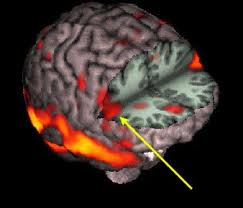
As we enjoy the overwhelming resources of the Internet, are we sacrificing our ability to read and think deeply? This is the concern of Nicholas Carr, author of The Shallows: What is the Internet Doing to Our Brains. He documents historical and scientific evidence that our brains change in response to our experiences. In a recent interview, the author said,
I think the Internet encourages a certain type of thinking, a certain type of interacting with the world and with each other. It emphasizes multi-tasking, constant stimulus, gathering lots of little bits of information very quickly, constant exchanges of messages in this fast-pace skimming and scanning behavior. But on the other hand, the technology discourages other types of thinking that to me are extraordinarily important, the ways of thinking that define the possibilities of the human intellect.
The net discourages any type of thinking that requires deep attentiveness, that requires you to screen out distractions and incoming messages and really focus your mind on one thing for an extended period of time.
There is a growing body of psychological and neuro-scientific evidence that shows that people who spend a lot of time online think in different ways than people who don’t.
Mr. Carr describes how human thought has been shaped throughout history by “tools of the mind,” like the alphabet, maps, the printing press, the clock, and the computer. He cites recent discoveries in neuroscience by Michael Merzenich and Eric Kandel. Science tell us that the technologies we use to find, store, and share information can literally reroute our neural pathways.
An Epidemic of A.D.D.
We are becoming ever more adept at scanning and skimming, but we are losing our capacity for concentration, contemplation, and reflection. In the interview Carr says, “we’re losing the ability to resist the impulse to flit around and be distracted, and really dig into sophisticated levels of thinking. We have to resist our primitive instincts to gather any information that’s available to us.”
How Does the Internet Affect Interpersonal Communication?
It seems that we trade quality for quantity and speed. There is more superficial conversation and less intimate involvement. Carr says:
You can argue that people are communicating more intensely with friends and family now, because in the past you had to be physically next to them, or at least near a phone, to talk to them. But there’s other evidence that the quality of conversation, the subtlety, is diminished when you’re sending these brief messages through texts or tweets. But it’s probably too early to really know the full affects of the Internet on our social lives.
Dr. Paul Howard Jones reviewed 178 research studies on What is the Internet Doing to Our Brains?. Below is a video of Dr. Jones summarizing the scientific evidence:
Posted in Social Media Relationships Uncategorized by .
Jan 13
5
Online and Offline Relationships
Online and Offline Relationships — It Goes Both Ways
“Online Building Offline Relationships” is the title of a post by George Couros in his blog, “The Principal of Change.” George is an innovative school Principal who writes about fostering effective relationships. I couldn’t agree more with what Principal Couros wrote:
If I know anything, whether it is as an administrator, teacher, or simply a human being, everything starts with relationships. If we can’t connect with people, it is hard for us to do anything. If technology can help that, we should be all over it.
In a post about building relationships online and some easy ways to achieve it, Leo Jackson wrote:
You see I believe the number one way to make it as a blogger is to make relationships with other bloggers… Be sure when they do status updates or upload videos etc. you are engaging with them. Answer questions when they ask, if something they posted helped you out at all, tell them.
Finding Love Online
In a previous post I mentioned examples of how Social Networking May Lead to Love:
Love begins with contact, online or offline. I have several personal friends who met strangers online, developed relationships, and have been happily married for a decade or more to persons they met online. One happy couple met playing cards online. Those relationships are worth a thousand other Facebook Friends. The key is that they turned contacts into relationships.
Non-Verbal Communication
It goes both ways — online to offline or offline to online. In another post, “Communicating Love at a distance,” I pointed out:
Love is a “many splendorous thing.” Love is best shared live and in person. Non-verbal communication enhances the whole experience. However, there are many situations in which lovers are not in the same location. Modern technology has provided many channels of communication to bridge the gaps.

Videoconferencing, Skype, and Google+ Hangouts to the rescue! See my post, Video vs. Text on Social Media:
Certainly we can get more cues to the meaning and the feeling behind content from body language, facial expression and tone of voice, etc. Especially emotion and conviction are conveyed better through visual cues than through mere text.
Dating in the Digital Age
Ken Solin writes about Dating in the Digital Age on the AARP website. Ken is a former entrepreneur turned dating expert. Although singles meet on the AARP Dating website, Ken says:
Telephones still work best
Get on the phone and be your authentic self. That way, you won’t feel the burden of living up to an image that isn’t really you… Ten minutes on the phone can tell you more than a month of emailing.
Gina Stewart is an online dating consultant and columnist who has worked with several big marketing firms but found her passion as an online dating consultant that helps her clients market themselves. As a guest on the dating blog, FrankLove.net, Gina said:
whether you like it or not, you are presenting a picture of yourself, a brand, and ultimately you’re trying to get people to buy that brand and go out on a date with you…your online dating written profile, your emails, your behavior, should all be geared with that in mind. That you are ultimately trying to get someone to do something which is go out with you, get to know you further or whatever.
So, when people are online dating, they need know that they need to represent themselves as a brand. They need to be consistent about the message that they’re sending to other people in terms of the type of person that they are. It’s also really important to identify who their audience is. Who is it that you’re actually trying to attract?
Online Marketing is Like Dating
Marketing on the Internet is similar to online dating. Here too it is strongly recommended that you ask yourself this simple question: “who exactly is looking for my content, product or service?”
Posted in Personal Alliances Romantic Relationships Social Media Relationships by .
Jan 13
4
Focus vs. Distractions

Distracted Driving
Focus Concentrates Energy and Attention
Focus is what makes lasers and hydraulic jacks so powerful. Focus is also the underlying secret of goal direction. Distraction is the enemy of focus.
While I was trying to write this blog post, I was distracted by a random idea that caused me to open Twitter and post a tweet — which led me to google a quote, which led me to another quote, so I posted two tweets.
Then the phone rang, etc. You get the picture… 😉
“Multi-Tasking” is an Illusion
Annette Lucas shared her “Best Ever Time Management Tip” in a recent blog post, excerpted below:
Here is a great strategy for actually completing some of those tasks on that long to-do list you have.
The first thing you have to do —- Is turn everything off!
Yes, turn off everything that has nothing to do with the task you are trying to complete. For example, if you need to write that blog post for day 2 of the 30 day challenge, you need to turn off Facebook, turn off Twitter, close all those webpages, and Yes – turn off your phone.
Ironically, I had read Annette’s blog post less than 48 hours before starting this post, but “Men more frequently require to be reminded than informed.” This quote from the great philosopher Samuel Johnson was posted in 1750 but is still often quoted today. In fact that is the quote I remembered that caused me to open Twitter.
A good article by Dilanka abut “Common Distractions” included the following:
“the internet is probably the biggest distraction in existence today. Don’t get me wrong, the internet is immensely valuable if used correctly, but the majority of the people actually hinder their personal and business goals because of it. I’ve caught myself spending hours per day clicking one link after the other through a labyrinth of sites like a junkie rabbit chasing after cocaine pellets; only to end up back in square one dazed and confused. It’s very surreal – at the end of your time-wasting session, you could actually feel your energy being thrown away at the expense of potentially producing something great, acting on that idea, starting a venture so you could quit your @#&% job.” Read more: http://stellarmine.com/common-distractions/#ixzz2H24Rfguz Credit for the image above is due to this article.
Unplug for Productivity
This advice is one of the helpful suggestions in a Social Media Club article about Staying Focused in a World of Social Distractions :
Every time that the phone rings or an alert arrives with a new email, it’s a distraction from whatever we were working on when that occurred. If you sit down to accomplish a task, consider turning your phone to silent (and putting it upside down or out of sight) and taking your email server offline. Work for a steady hour, or however long you can afford to be out-of-reach, and then check your messages and emails. You can even set an alarm for an hour. Take fifteen minutes to respond to emails and phone calls before turning them both off again to get back to work on your project.
Leo Babauta explained 10 Ways to Eliminate Distractions in a great article on the FreelanceSwitch blog. Leo sums up this way:
One of the fundamental principles of productivity is that in order to get things done, you gotta focus. And that necessary focus requires that you eliminate as many distractions as possible — not always an easy task with the Internet, coworkers and busy phones calling to you from every direction.
Posted in Business Relationships Social Media Relationships Uncategorized by .
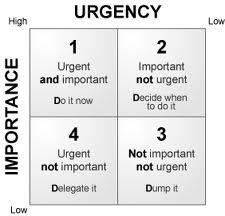 “Time Management” Puts Us in Control of Our Life
It is not too late for “New Year’s Resolutions”! Today is the FIRST day of the rest of our lives. We all have 24 hours per day. We have free will to choose what to do with those hours. What will you make of your life?
Why Before What or How
The new year season is a good reminder to consider our values and goals, before we make “to do lists” of tasks. We might be climbing the ladder of success only to discover later, with regret, that the ladder was leaning against the wrong wall.
Getting the RIGHT Things Done
Life management is about effectiveness more than efficiency. We could be getting more of the wrong things done faster and more efficiently. “Right” or “wrong” is relative to our own values and goals.
Pareto’s Principle, aka The 80/20 Rule
The realization that 80% of valuable results come from 20% of our activities is really a very exciting concept. It offers the possibility of quadrupling our results by focusing on the vital few rather than the trivial many.
Important vs. Urgent
Stephen Covey, author of Seven Habits of Highly Effective People, pointed out that the main difference between highly successful people and unsuccessful people is that winners do important things proactively even when they are not urgent. Losers react to urgent demands even if they are relatively unimportant. They allow the urgent to crowd out the important. For example, we all know that exercise is important, but it is rarely urgent. We can easily procrastinate.
Diminishing ROI
Pursuit of excellence can be overdone, especially considering finite limitations of time and money. The Law of Diminishing Returns explains the tendency for a continuing application of effort or skill toward a particular project or goal to decline in effectiveness after a certain level of result has been achieved. At some point further effort becomes less and less worthwhile, especially relative to what else we could be doing instead with the time and resources.
Opportunity Cost
Doing one thing in the extreme steals resources from other things we could be doing. In a previous post about Opportunity Cost I wrote:
Choosing one path has kept us from another. The difference is called “Opportunity Cost.” As we reflect on our past, we may say, “Gee, I’m glad I did!” or “Gee, I wish I had…” John Greenleaf Whittier wrote, “For all sad words of tongue and pen, the saddest are those “It might have been”. Choices yield consequences and ramifications that may last a lifetime.
To Do List and Not To Do List
Choosing what activities to give up to make room for relatively more important things may be just as valuable as making lists of “Things to Do.” Some people recommend a “Not To Do” list. Certain television programs come to mind.
Stephen Covey recommends planning weekly rather than daily, so that the most important things get entered into our calendar before the space is taken up with less important things. It is easy to fill a day with Pareto’s trivial many at the expense of the vital few.
Empathy in Business — Does it Belong?
I am reminded of the mafia rationalization: “It’s not personal; it’s business!”
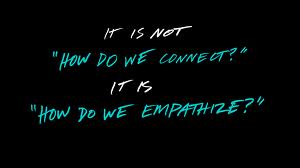
However, I contend that business has always been personal, and is even more so in the age of consumer control.
According to Wikipedia, “Empathy has many different definitions. These definitions encompass a broad range, from caring for other people and having a desire to help them, to experiencing emotions that match another person’s emotions, to knowing what the other person is thinking or feeling, to blurring the line between self and other.”
The difference between empathy and sympathy is the difference between “I’m sorry” and “I apologize.”
Empathy in Business
Evidence of the relevance of empathy to business is outlined in the article on the Mind Tools blog called, “What’s Empathy Got to do with It?”
There are numerous studies that link empathy to business results. They include studies that correlate empathy with increased sales, with the performance of the best managers of product development teams and with enhanced performance in an increasingly diverse workforce. A few of these studies can be viewed on the site of The Consortium for Research on Emotional Intelligence in Organizations.
The fact that empathy is an important component of effective relationships has been proven: In studies by Dr Antonio Damasio (outlined in his book: “Descartes’ Error: Emotion, Reason, and the Human Brain.“), medical patients who had damage to part of the brain associated with empathy showed significant deficits in relationship skills, even though their reasoning and learning abilities remained intact.
Empathy is Natural
An article in Psychology Today entitled “Are We Entering the Age of Empathy?” , by Ray B. Williams, quotes research documented in a book, The Age of Empathy: Nature’s Lessons For A Kinder Society, by Dr. Frans de Waal.
The distinguished scientist says it is long overdue that we jettisoned our beliefs about human nature–proposed by economists and politicians–that human society is modeled on the perpetual struggle for survival that exists in nature. De Waal says this is mere projection on our part. Nature is replete with examples of cooperation and empathy.
Unfortunately, philosophy and religion as well as science have long suggested that caring and kindness do not come from our biological nature, but are ways that humans overcome biological instincts. In contrast, aggression, dominance and violence have been attributed to our DNA. According to de Waal, for humans and other advanced animals, sharing, compromise and justice matters. He argues that feeling and acting with empathy for others is as automatic as aggression.
The Golden Rule is Universal
The great Christian theological book, Mere Christianity, by C. S. Lewis, tells us that:
The Golden Rule of the New Testament (Do as you would be done by) is a summing up of what everyone, at bottom, had always known to be right. Really great moral teachers never do introduce new moralities: it is quacks and cranks who do that. As Dr. Johnson said, “People need to be reminded more often than they need to be instructed.”
Empathy Takes Effort
Seth Godin wrote (in Seth’s Blog):
When we extend our heart, our soul and our feelings to another, when we imagine what it must be like to be them, we expose ourselves to risk. The risk of feeling bruised, or of losing our ability to see the world from just one crisp and certain point of view.
It’s easier to walk on by, to compartmentalize and to isolate ourselves. Easier, but not worth it.
Sep 12
29
Are You Getting Older and Wiser?
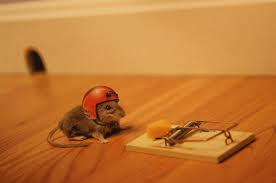
Older and Wiser
Older and Wiser?
When you were a teenager, you may have thought you knew everything.
Now that you are older, you probably realize that you didn’t know what you didn’t know then. Now you are older and, hopefully, wiser. We live and learn. I wonder what I still don’t know that I don’t know.
It has been said that good decisions come from wisdom; wisdom comes from experience; and experience comes from bad decisions. You may recognize some of these sayings:
– “I was born in the morning, but not yesterday morning!”
– “This is not my first rodeo.”
– “I’ve been around the block a few times before.”
– “If you continue to do what you’ve always done, you will continue to get what you’ve always got.”
– “Fool me once; shame on you. Fool me twice; shame on me.”
– “The definition of insanity is doing the same thing over and over and expecting different results.”
– “Stupid is as stupid does.” (Forrest Gump’s wise mother)
– “I wish I had known then what I know now…”
Declining energy and strength with age is compensated for by wisdom from analogous experiences and perspective.
Is Nothing Constant Except Change?
“Ay, there’s the rub!” In the stone age the tribal elders were revered and respected for their wisdom, because their experience was directly relevant to the challenges of the day. However, the problems of the 21st century are often different from the experience of the elders. In some situations, such as communications technology, the practical application of 20th century experience is questionable.
The elders are faced with the challenge of keeping up with exponential change or becoming perceived as irrelevant. I am among those who are scrambling to keep up with new technology. I have also learned about synergy, leveraging the skills of others (outsourcing), and the truth of interdependence.
Some Things Never Really Change
Although technology is central to doing things in the 21st century, the most important things in life are more about being than doing. Who you are and how you feel about that, as well as who you know and how they feel about you, are timeless issues.
Although the channels may be different, communication and relationships are still important. Family and networking still provide synergy and leverage. Happiness is still related to values and virtues. “Faith, hope, and Love endure.” Truthfully, I believe I am getting older and wiser.
image credit to Leon Martin http://elmirarealestate.org/2011/05/17/if-only-i-knew-then-what-i-know-now/
Posted in Business Relationships Personal Alliances Uncategorized by .
Old School vs. New School Controversy
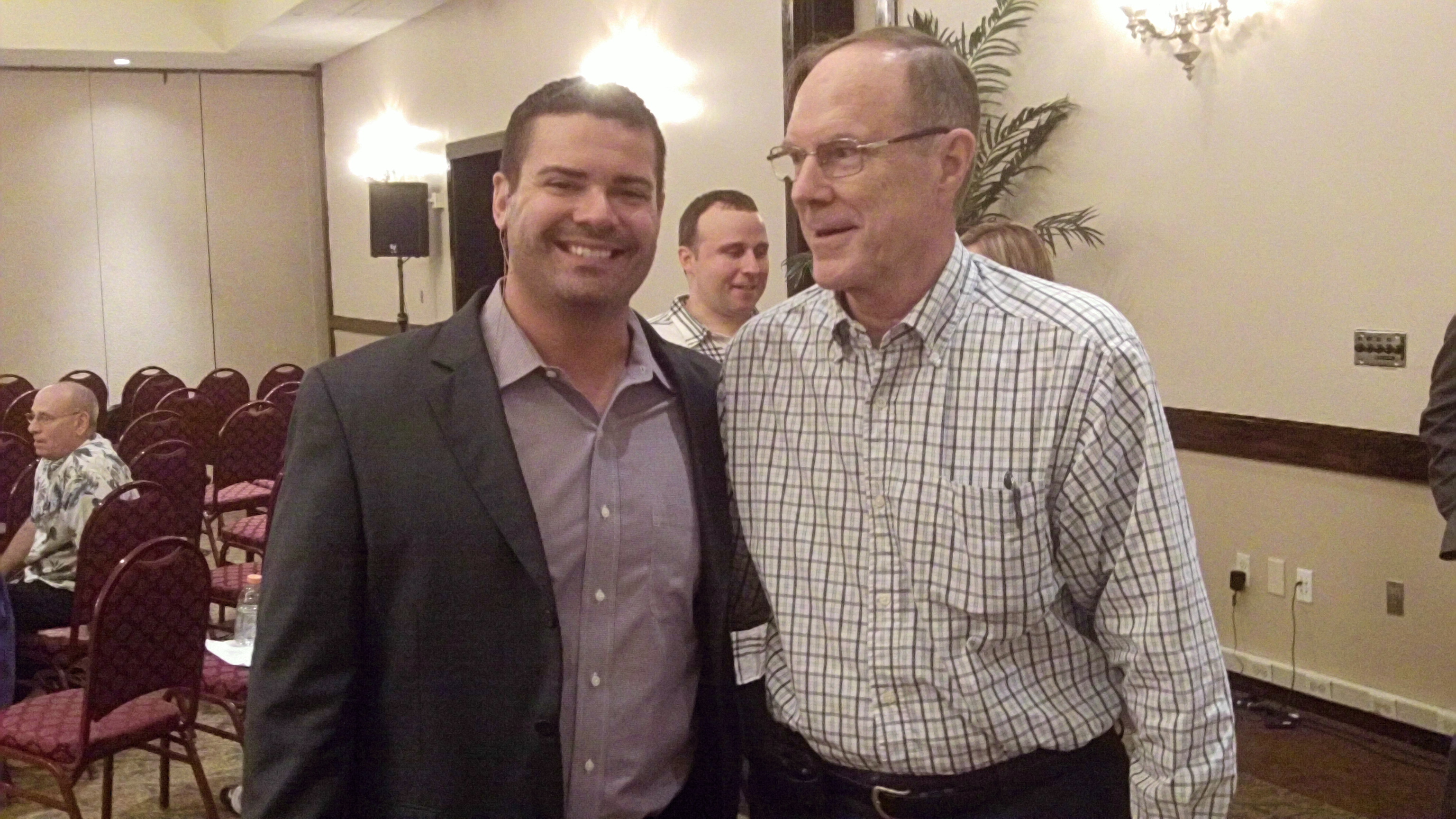
Ray Higdon and Buddy Hodges at Pro Marketing Summit
Ray Higdon, Number One Top Earner with Numis Network , expressed his opinion in
a brief video at the Pro Marketing Summit. (Click this link to watch 1 minute video.)
Posted in Business Relationships Social Media Relationships by .
This post is a draft to be continued later. For now I wanted to test the RSS Feed.
Interact and Socialize
Engage
Relationships online are formed by engaging in conversations and interacting. Commenting on another person’s posts or status updates is just as important as posting your own content. Following up and responding to the comments of others gives them attention and recognition, which are important human needs.
Invest Attention
Old fashioned push advertising or brochure-like web sites are impotent. Paying (investing) attention to what others are saying (writing) online is the beginning of a real relationship. It is more effective to be interested than to be interesting!
The idea of engagement deserves repeating and emphasizing. It seems obvious, but most people do not practice it enough — including me…
It is my sincere intention to engage in more conversation and interaction in social networks and communities in 2013.

Never Give Up
Persistence Pays. Winston Churchill gave a famous speech on perseverance to students. He said,
|
“The pessimist sees the problems in every opportunity. Whereas the optimist sees the opportunity in every problem” “Never give in, never give in, never; never; never; never – in nothing, great or small, large or petty – never give in except to convictions of honor and good sense”
|
 |
Success is a journey, and often a monotonous one. Sometimes we need to simply put one foot in front of the other and keep on keeping on. I remember when I was lost in the Arizona desert in summer without a hat (big mistake!). I was awfully tempted to just sit down, but I kept on keeping on. After what seemed like an eternity, I finally made it to the ranch. Perseverance saved my life. Below is one of my favorite poems: (I gave it on a plaque to a bride and groom when I was “Best Man.”)
Don’t Quit – by John Greenleaf Whittier
When things go wrong as they sometimes will,
When the road you’re trudging seems all up hill,
When the funds are low and the debts are high
And you want to smile, but you have to sigh,
When care is pressing you down a bit,
Rest, if you must, but don’t quit.
Life is queer with its twists and turns,
As everyong of us sometimes learns,
And many a failure turns about
When he might have won had he stuck it out,
Dont’ give up though the pace seems slow,
You may succeed with another blow.
Success is falure turned inside out,
The silver tint of the clouds of doubt,
And you never can tell how close you are,
It may be near when it seems so far,
So stick to the fight when you’re hardest hit
It’s when things seem worst that you must not quit.
For all the sad words of tongue or pen,
The saddest are these: “It might have been!”
Related articles
- Keep on Keepin’ On (myheartsmission.com)
- What It Means To Perservere (ariannasrandomthoughts.com)


Posted in Business Relationships Family Relationships Personal Alliances by .